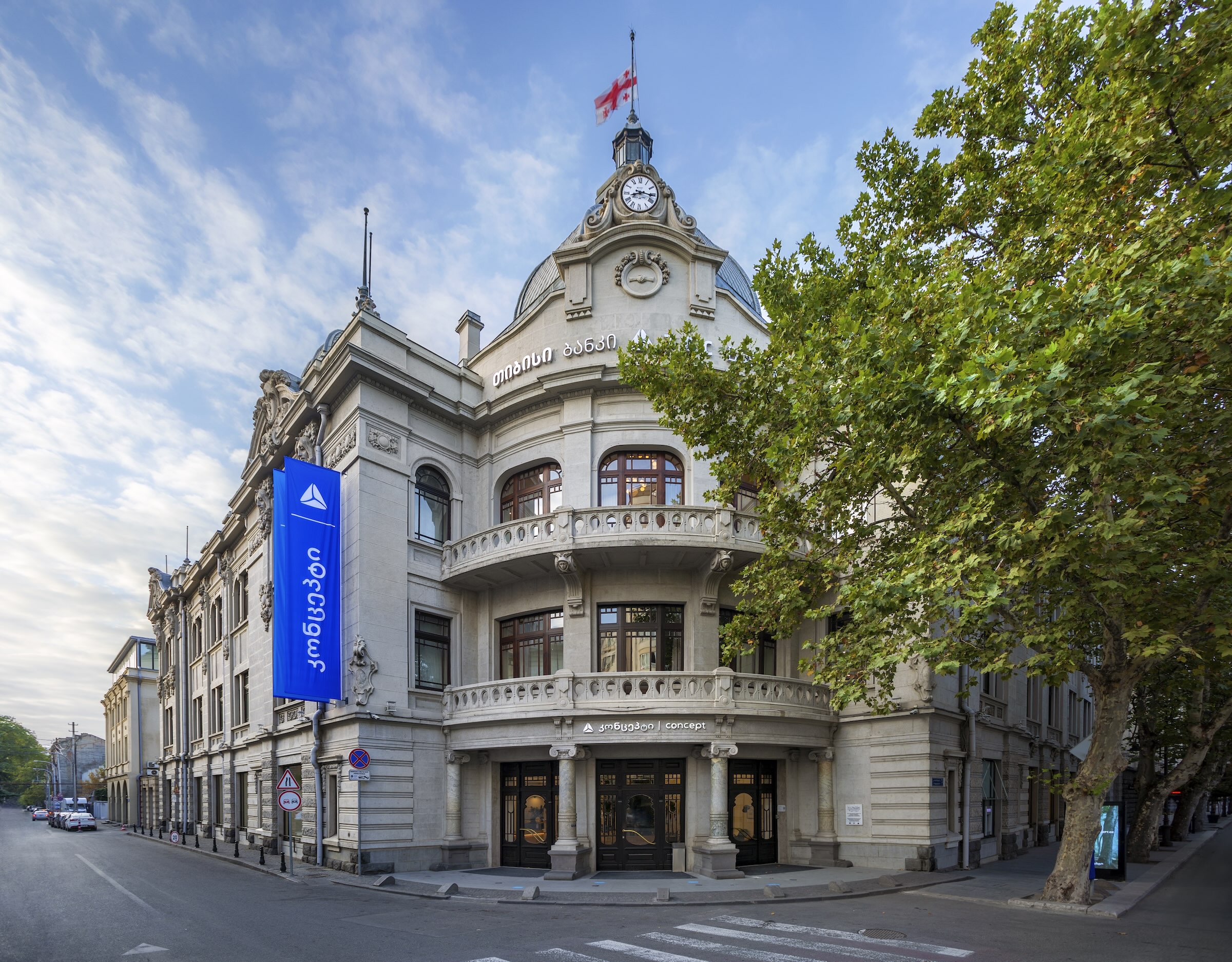
TBC Bank Group PLC (LON:TBCG)
| Metric | Value |
|---|---|
| Share Price | £44.90 |
| Market Cap | £2.58B |
| Shares Outstanding | 55.1M |
| EPS (TTM) | £6.98 |
| P/E | 6.4 |
| Book Value Per Share | £30.80 |
| Price / Book | 1.4 |
| ROE | 23.5% |
| ROA | 3.4% |
| Dividend Yield | 5.6% |
Key Investment Highlights
- • Exceptional profitability: TBC generates 3.4% return on assets and 23% return on equity, placing it among the most profitable banking franchises globally.
- • Duopolistic market structure: Georgia’s banking sector is effectively dominated by TBC Bank and Bank of Georgia, supporting stable margins and disciplined lending standards.
- • High structural net interest margins: The bank operates with net interest margins near 7%, significantly higher than the 2–3% typical of developed-market banks.
- • Digital banking leadership: High digital adoption enables a lean cost structure, with a cost-to-income ratio of roughly 37%.
- • Expansion into Uzbekistan: The bank is building a digital banking platform in Uzbekistan, a significantly larger and underbanked market that could support long-term growth.
Investment Summary
TBC Bank Group PLC is one of the most profitable publicly traded banks globally. The bank consistently generates returns on equity above 20% while maintaining a 3.4% return on assets, far above global banking averages of roughly 0.8–1.2%.
The company dominates the Georgian financial sector and operates within a highly concentrated banking system that supports strong pricing power and disciplined lending standards. High digital adoption and efficient cost structures further enhance profitability.
At the same time, the bank is expanding a digital banking platform into Uzbekistan, a substantially larger and underbanked market.
Despite these favorable characteristics, the shares remain discounted relative to global banking peers, largely due to emerging-market perceptions and limited institutional coverage.
If the bank can sustain its current profitability while expanding regionally, investors may benefit from continued earnings growth, book value compounding, and potential valuation normalization.
Business Overview
TBC operates a universal banking platform headquartered in Tbilisi, Georgia, providing retail banking, corporate lending, payments, insurance, brokerage, and digital financial services. The group’s strategy combines a mature, highly profitable banking franchise in Georgia with a digital-first expansion into Uzbekistan.
In Georgia, TBC operates a full-service universal bank with a nationwide physical and digital presence. The franchise holds a leading position in the country’s financial sector, which is effectively dominated by two institutions – TBC Bank and Bank of Georgia. This concentrated market structure supports disciplined competition, stable lending spreads, and strong profitability.
Alongside its Georgian operations, the group is building a fully digital banking platform in Uzbekistan. The expansion began in 2019 with the acquisition of digital payments provider Payme, followed by the launch of a fully licensed digital bank. The platform operates on a proprietary technology stack and is managed by a dedicated local team.
The group’s structure therefore combines two complementary business models: a mature banking franchise generating stable earnings in Georgia and a scalable digital platform targeting long-term growth in Uzbekistan. This structure allows TBC to leverage its technology capabilities and banking expertise while expanding into a significantly larger regional market.
The Uzbekistan platform is also expanding beyond core banking into payments, commerce, and digital marketplace services, creating a broader financial ecosystem designed to increase user engagement and cross-sell financial products.
Industry Context
Georgia is one of the faster-growing economies in Eastern Europe, supported by tourism, remittances, and structural economic reform.
The banking sector continues to benefit from several favorable dynamics:
• expanding consumer credit markets
• rising mortgage penetration
• increasing SME lending
• strong digital banking adoption
Compared with developed markets, financial penetration remains relatively low. As a result, banks in the region have historically been able to grow loan books faster than GDP for extended periods.
Financial Performance
TBC’s financial profile stands out relative to global banking peers.
Profitability
| Metric | Level |
|---|---|
| Return on Equity | 23.5% |
| Return on Assets | 3.4% |
Global Bank ROA Comparison
Most developed-market banks generate roughly 10–15% ROE and approximately 1% ROA:
| Bank | ROA |
|---|---|
| JPMorgan | 1.3% |
| Bank of America | 0.9% |
| HSBC | 0.7% |
| BNP Paribas | 0.47% |
| ICICI Bank | 1.9% |
| HDFC Bank | 2.1% |
| Bank of Georgia | 3.8% |
| TBC Bank | 3.4% |
Returns on assets above 3% are extremely rare in global banking. Most developed-market banks operate near 1% ROA, while even strong emerging-market banks typically generate 2–2.5%. TBC Bank generates ROA above 3% while operating with balance-sheet leverage of roughly 7x assets to equity, compared with 10–15x for many global banks, indicating unusually strong asset-level economics rather than reliance on leverage. TBC’s profitability therefore places it among the most efficient banking franchises globally. Over the past decade, the bank has maintained a median ROE of roughly 22%, demonstrating the durability of its earnings power.
Earnings Growth
TBC has delivered strong earnings expansion in recent years.
Net income has grown approximately 20% annually over the past five years, supported by loan growth, digital adoption, and operating efficiency.
Balance Sheet
Recent operating metrics include:
| Metric | Value |
|---|---|
| Gross Loans | GEL 28.5B |
| Deposits | GEL 23.3B |
| Quarterly Net Profit | GEL 346M |
| Loan Growth (YoY) | 16% |
Loan growth continues to reflect both economic expansion and increasing credit penetration across the Georgian economy.
The bank also maintains a strong capital position, with a Common Equity Tier 1 (CET1) ratio of 16.8%, comfortably above regulatory minimums and consistent with well-capitalized global banking institutions.
Unit Economics of Georgian Banking
The economics of Georgian banking help explain the unusually high returns generated by the country’s leading financial institutions.
Three structural characteristics drive profitability.
High Net Interest Margins
Banks in Georgia benefit from relatively wide lending spreads compared with developed markets. Consumer and SME credit markets remain underpenetrated, allowing banks to maintain strong pricing on loans while funding costs remain relatively stable.
TBC operates with a net interest margin of approximately 7%, substantially above the 2–3% margins typically observed among large U.S. and European banks.
Efficient Cost Structure
Operating costs are significantly lower than in developed markets. Labor costs, branch infrastructure, and regulatory overhead are comparatively modest, while high digital adoption reduces transaction costs.
Concentrated Market Structure
The Georgian banking system is effectively a duopoly dominated by TBC Bank and Bank of Georgia. This market structure limits destructive competition and supports disciplined lending practices.
The result is a system capable of sustaining returns on equity above 20% even during periods of moderate economic growth.
Competitive Advantages
Several structural advantages support TBC’s sustained profitability.
Market Leadership
Georgia’s banking sector operates as a duopoly, allowing leading banks to maintain pricing discipline and stable lending standards.
Digital Banking Platform
TBC has invested heavily in digital infrastructure.
Approximately 68% of loans and around 70% of retail transactions are executed digitally, reducing operating costs and improving scalability.
Cost Efficiency
Combined with digital banking adoption, the bank’s lean operating structure supports a cost-to-income ratio of 37.5%, compared with 55–70% for many developed-market peers.
Geographic Expansion
Uzbekistan represents the bank’s most significant long-term growth opportunity.
| Country | Population |
|---|---|
| Georgia | ~3.7M |
| Uzbekistan | ~36M |
The Uzbek financial system remains underdeveloped relative to its population.
TBC’s digital-first strategy may allow the bank to scale rapidly without the capital intensity of traditional branch banking.
Valuation
Despite strong financial performance, TBC trades at a modest valuation relative to global banking peers.
| Metric | Value |
|---|---|
| P/E | 6.5 |
| Price / Book | 1.4 |
| ROE | 23.5% |
For comparison, most developed-market banks generating 10–15% ROE trade at 10–14x earnings. Banks generating sustained returns on equity above 20% typically trade near two times book value or higher. Despite producing comparable profitability, TBC currently trades at roughly 1.4x book value, reflecting emerging-market risk perceptions rather than underlying operating performance.
Residual Income Valuation
Banks are most appropriately valued using a residual income framework, which measures economic profit generated above the cost of equity capital.
Intrinsic value can be expressed as:
Intrinsic Value = Book Value + Present Value of Residual Income
Where:
Residual Income = (ROE − Cost of Equity) × Book Value
Assumptions
| Variable | Assumption |
|---|---|
| Book Value Per Share | £30.8 |
| ROE | 23.5% |
| Cost of Equity | 12% |
| Long-Term ROE | 18% |
| Terminal Growth | 3% |
TBC currently generates an 11.5% economic profit spread above its cost of equity.
Discounting forecast residual income over a ten-year horizon produces an estimated intrinsic value of approximately:
~£62 per share
| Metric | Value |
|---|---|
| Current Share Price | £44.90 |
| Estimated Intrinsic Value | £62 |
| Upside | 38% |
Implied Price-to-Book
In equilibrium:
Price-to-Book ≈ ROE ÷ Cost of Equity
Applying this relationship implies a fair multiple near 1.9x book, compared with the current market valuation of approximately 1.4x book.
This suggests that the market is implicitly discounting either a decline in long-term profitability or a higher risk premium associated with the bank’s operating environment.
Book Value Per Share
Over the past decade, TBC’s book value per share has compounded at approximately 17% annually. Given a dividend payout ratio near 30–35%, this rate of book value growth is broadly consistent with the bank’s long-term return on equity.
| Year | Book Value Per Share |
|---|---|
| 2015 | £7.5 |
| 2016 | £9.1 |
| 2017 | £11.0 |
| 2018 | £13.2 |
| 2019 | £15.7 |
| 2020 | £18.3 |
| 2021 | £21.8 |
| 2022 | £25.6 |
| 2023 | £28.7 |
| 2024 | £30.8 |
Growth Drivers
Several factors could support continued earnings expansion.
Credit Market Expansion
Georgia’s financial system continues to deepen as consumer and SME credit penetration increases.
Digital Banking Economics
Digital distribution reduces operating costs and increases customer engagement.
Uzbekistan Opportunity
TBC’s digital bank in Uzbekistan could represent a meaningful long-term growth engine given the country’s large population and relatively underdeveloped banking sector.
Risks
Despite attractive fundamentals, several risks should be considered.
Emerging Market Risk
Georgia is a small economy subject to capital flows, currency volatility, and macroeconomic fluctuations.
Geopolitical Risk
The country’s geographic position between Russia, Turkey, and the European Union introduces potential geopolitical uncertainty.
Currency Risk
Foreign investors are exposed to fluctuations in the Georgian lari.
Regulatory Environment
Banking regulation in emerging markets can evolve rapidly and may affect profitability.
Why the Market Discounts Georgian Banks
Despite strong profitability, Georgian banks often trade at persistent discounts to global peers. Several structural factors contribute to this valuation gap.
Small Market Size
Georgia is a relatively small economy with a population of approximately 3.7 million. Limited market size restricts the scale of domestic financial institutions and reduces the number of large institutional investors able to build meaningful positions.
As a result, liquidity in Georgian bank equities tends to be lower than in developed-market financial institutions.
Emerging Market Risk Perception
International investors often apply higher required returns to companies operating in emerging markets. Political risk, capital flow volatility, and macroeconomic sensitivity can lead investors to demand higher risk premiums.
These perceptions can suppress valuation multiples even when underlying business performance remains strong.
Currency Exposure
Foreign investors are exposed to fluctuations in the Georgian lari. Although the banking system itself is stable, currency volatility can introduce additional uncertainty for international shareholders.
Limited Institutional Coverage
Georgian equities receive relatively little attention from global sell-side analysts and institutional investors. Limited research coverage can reduce investor awareness and contribute to persistent valuation inefficiencies.
Implication for Valuation
These factors help explain why Georgian banks often trade below the valuation levels of developed-market financial institutions.
However, they do not necessarily diminish the underlying profitability of the business model.
If TBC continues to sustain high returns on equity while expanding regionally, the current valuation discount may narrow over time as the bank’s growth and profitability become more widely recognized.
Investment Thesis
TBC Bank represents a rare combination of:
• extremely high profitability
• strong structural growth
• modest valuation
While emerging market risks remain, the bank’s financial performance compares favorably with leading banking franchises globally.
At current valuations, investors appear to be paying a relatively modest multiple for a bank capable of compounding capital at rates significantly above industry averages.
Conclusion
TBC Bank Group PLC is one of the most profitable banking franchises in the public markets, generating sustained returns on equity above 20% while trading at a substantial discount to global peers.
If the bank continues to compound earnings while expanding into larger regional markets, the combination of growth and valuation normalization could produce attractive long-term returns for investors willing to accept emerging market exposure.
Disclosure: The author may hold positions in securities discussed in this article. This analysis is for informational purposes only and does not constitute investment advice or a recommendation to buy or sell any security.